Thursday, 22 August 2013

Pied Flycatcher and Whinchats

Today started at the scrape with it raining gently. Not much has changed over the last few days other than the ruff has finally disappeared (south I assume) as have the little grebe chicks, though these seem to have gone down the throat of the heron.
Around 9.00 the rain stopped so I went to the Elms in hope of something good. There was – a spotted flycatcher (I’m easily pleased).  I came across it on a twig with deep shadow behind it giving the images a pleasing look. Several times it flew from the twig hunting but returned allowing me to adjust the camera settings each time – due to the dark backdrop I had to under-expose by minus 2.5-3 stops – I’ve never had to do that before.


After it moved off I did manage to relocate it on the north side of the Elms but I never got close again. It then started to rain seriously so I retired to the Obs for a coffee and a chinwag. It seems the Obs are going to be organising a lot more trips in the future so keep an eye on the website as to where they are going.

Around 3.00 this afternoon the rain stopped so I ventured out again. No sign of the spot fly in the Elms but I found a garden warbler in Middle Field and 7 whinchats along the Ancient highway track. 

Gardeen warbler

Whinchats along the Ancient Highway

Whinchat at Dickson's corner
They then moved into the brambles by Dickson’s Corner but as normal they never let me get closer than 35-40 yards but nice to see. 

Tuesday, 20 August 2013

Backsand 20th August

Last week my daughter came home from university. As normal after a week or two of wall to wall partying she had a cold/chest infection which she very graciously gave to Angie and me. As a consequence I spent most of Saturday, and all of Sunday and Monday in bed or on the settee feeling sorry for myself.  Today I felt a little better so I decided to check out Backsand (again did I hear you say?).  Each year it seems to throw up one or two goodies but thus far nothing too exciting but one can only hope.
Today I arrived at 9.15 which normally would be regarded as a bit early for the 11.30 high tide but when I arrived there were quite a few birds already at roost - 10 greenshank, 31 redshank, 3 black-tailed godwit (quite a rare visitor to BS), 1 green sand, 2 little ringed plovers and 30 lapwing.
Possibly due to the excavation work now on going around the scrape perimeter the birds are  roosting just about as far as one can get from the photographic hide – on the far bank and to the west of the hide on that side though I suspect you can’t see them from there due to the height of the reeds.
Whilst the shanks were roosting the blackwits and LRPs were actually feeding and the LRPs slowly but surely worked their way across the mud banks and eventually made it to the island immediately in front of me. The light wasn’t in the best of directions (from the right) but they stayed in front of me for 15 minutes or so, so a lot of pictures were taken. One of the birds was a juvenile and the other, I assume, its parent because the adult objected to a lapwing getting close to the juvenile.  


Juv little ringed plover 
The adult only came close for a couple of minutes.


Adult little ringed plover
By now it was high tide and the numbers recorded were 26 greenshank, 40 redshank, 6 blackwits, 2 common and 2 greensands, 42 lapwing plus 2 little egrets and a grey heron.
In general nothing moved at all though the 2 green sands dropped down in front of the hide for 5 seconds.

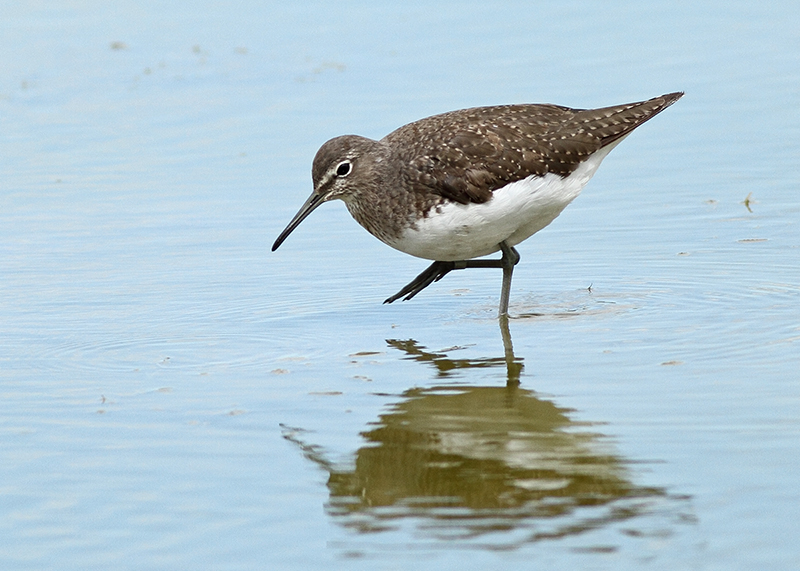
Green sandpiper
The black tailed godwits were a little interesting in that they were quite orange but without any of the chest bars normally shown by an adult in summer plumage. I assume they are juveniles but they were a lot more orange than I thought a juvenile would be from the field guides. The picture is pretty poor but it should give you an idea of just how coloured they were. (It seems Icelandic juveniles are strongly coloured).

Black-tailed godwits

Access:
I used the revised route and wasn’t challenged today though the fence we were told would be erected hasn’t been.  They are now work on the bund along the access path so you get very close to the excavators – so if you go beware.


Tuesday, 13 August 2013

Backsand and it's access

Yesterday (12th) I spent the morning around the estate but ending up in the Gullies where a mixed flock of willow warblers, plus a mixed flock of tits kept me amused.  Also on show were several green and a lone great spotted woodpecker.
Willow warbler

Green Woodpecker (juv)

Gt Spotted woodpecker

High tide was 15.20 so just after midday I went down to Backsand.
Things are a lot better now with a lot of sand/mud revealed with even the area just in front of the photographic hide now showing some mud.
When I arrived the only waders were 4 green sands plus a snipe but as high tide approached the red and greenshanks started coming in with one of the first greenshanks walking from the roost to feed right in front of me.
Greenshank

Eventually I had enjoyed a few minutes of green sand, common sand and the snipe quite close to the hide but the light was poor – it was slightly overcast (normally good) but there is still so much water around that the glare caused problems.
Green sandpiper

Common sandpiper

Snipe

Quite late on a new small wader turned up and when I first saw it I thought a Kentish plover had dropped in but my excitement was dashed when I got the scope onto it. Eventually it too came over towards the hide but was never close.
Little ringed plover 

I packed up around 16.00 but as I was leaving I was challenged by some Environment Agency surveyors who asked why I was there. I told them the Obs had reached an agreement as to how we should get there but they disputed that permission should have been given – they were staking out the bund right across the access path! The exchange was amicable but they said they would contact their H&S guy and I said I would talk to Ian at the Obs. Today I discussed it with Ian and after a phone call to the H&S Manager (Alan someone I think) we arranged a meeting for 15.00 today.
Actually the Manager couldn't get there but 2 other EH&S guys turned up (one called Stuart) and we went down to the scrape and drove/walked around. The long and the short of it is that we will still have access using the route I discussed in a previous blog (via Newdowns new pool) and we have to get to the hides via the track between the scrape bund and the ditch (even though this is the long way round to the Photo-hide).
The bund the guys were staking out yesterday has been placed too close to the ditch and will be moved away from it by a couple of meters and a fence erected separating our access path from the construction site. We will have to stay on the ditch side of the fence which will be regarded as outside the construction boundary. At times the diggers will be working very close to the proposed fence so caution is advised and even though you will be outside the construction boundary it will be wise to make shore the drivers have seen you.

Hopefully the fence will be erected soon but I will let you know as soon as I do.

Wednesday, 7 August 2013

Scrapes again

My birding routine at the  moment is very predictable – start at Restharrow then go down to Backsand if the tide is right. Today was no different.  
At Restharrow there were the normal residents plus a common sandpiper, a redshank but the 5 snipe were new and they had the good grace to feed on the islands nearest the hide.

Not a snipe

3 of the 5 snipe


After a trip to the dentist I arrived at Backsand just after the high tide. No sign of the wood sands today but redshanks numbers were a very respectable 42, greenshanks numbered 19  and there were  4 common  and 3 green sandpiper. Water levels continue to drop and another island has appeared – to the right of the photographic hide, near the reed bed so the birds are getting closer.

Green sandpiper

There were some newcomers today in the form of 2 little grebes and 4 dunlin which I tried to string into curlew sandpipers but the black bellies made that difficult.
This is probably my last Backsand update till next week as we have visitors all weekend.

The only good thing about the current situation is that it’s keeping my petrol bill down and I dont spend hours on the computer going through loads of pictures.

Monday, 5 August 2013

Wood Sandpipers still at Backsand

At the moment my birding is a bit like Ground Hog Day.
My morning invariably starts at Restharrow then I move on to Backsand.
On the grass/scrub/reeds at Restharrow I see mippits and yellow wags plus a supporting cast of sedge and reed warbles and topped off with a few linnets and goldfinch. On the water there are the normal residents plus  a pair of little grebes, a deserted cygnet, a heron, a few little egret. If you are lucky a sandpiper or two will show and if you are unlucky a load of greylags and 5 Canada geese will fly in.
Today the sandpipers were missing but everything else was there and it was the turn of the yellow wags to come close along with one of the 3 little egrets. Yesterday the pipits performed.
Yellow Wagtail
And a little egret walked across the front of the hide.

Little Egret
A juvenile marsh harrier put in an appearance and cleared the place for a few minutes but normal service was quickly resumed.


Marsh Harrier
At 9.30 I left for Backsand (high tide was 11.20) and by 10.15 there were already a few shanks and 2 green sandpipers in residence.
The number of shanks increased right up to high tide and in the end there were 25 green and 35 redshank.  I think it was around 10.45 when the 2 wood sandpipers arrived though one disappeared after 30 minutes or so. The other was still there when I left at midday. The common sandpipers kept flying in and out so I have no idea how many separate birds there were but there were at least 3.

Part of the high tide roost
As previously the wood sands spent a lot of time on the emerged island out and to the right of the photographic hide so they were still too distant for good photos but one walked ~ 15 ft closer in the now very shallow water.

2 Wood sands plus a common


Wood Sandpiper showing how shallow a lot of the water is.


Still need the water level to drop another inch or so.

Saturday, 3 August 2013

Wood sand, green sand and common sand at Backsand

High tide was at 10.00 this morning so I arrived at 7.45 (birds normally start appearing 2 hrs before the high tide).
To get there I used the old route. This is possible because the work on the Sandwich flood defence scheme is strictly a Monday to Friday job. Going this way gave me the chance to see what excavation work has been going on. 
At the Sandwich end the new river bank/bund looks pretty complete and already stretches several hundred yards. It has a very gently sloping bank compared to the old bund/bank. This bund has been constructed by taking dirt from the field between the old access track and the river and this has produce a depression that already has some water in it . I suspect as the autumn wears on this could be an interesting spot for wader watching though viewing will be restricted to weekends. Today it just had a couple of hundred herring gulls roosting on the exposed dirt.
When I arrived at the scrape there were mainly mallards (~30), BH gulls (44) and lapwings (11) in residence plus a single greenshank, however over the next 15 minutes a few more redshank and greenshank turned up.  2 small islands have now appeared and the waders (and the gulls for that matter) were roosting on these (to the right looking from the Photographic hide).Things didn't change until around 9.00 (an hour before high tide) when more shanks appeared and a green sandpiper showed (there’s been one there all week but it’s often hidden behind the large permanent island on the left).
Around 9.30 I heard a new call and spotted a wood sandpiper coming in with another clutch of shanks.  I could hear a second one but it didn't land for a few more minutes – it must have been circling behind me.
To start they were on the newly emerged island to the right (looking more or less straight into the sun) but they seemed restless and flew around several times before landing on the other newly emerged island. By this time the shanks had increased to 17 green and 18 reds.

Greenshank, redshank and the first wood sandpiper
2 wood sandpipers having just arrived
Their final destination was the bank of permanent island on the left where they had a difference of opinion with the resident green sand.

Wood sandpipers in a flap

It was now around 10.00 and I had to be going but I popped into the main hide to see whether I could get some slightly better shots of the wood sands. This proved to be a good call because while I was there 2 common sands turned up as did a little egret.

Common sandpiper plus 2 wood sands

Another few inches of water still need to evaporate before the islands in front of the hide emerge but a few more days like today and things could be pretty good. All we need now is a few rarities to turn up (when I'm there!).


Friday, 2 August 2013

How to get White Balance correct

First and foremost the title is a question rather than a delaration as you will see if you carry on reading.

As some of you know I shoot my pictures in raw rather than JPEG. Whilst this means a little more work to get to the finished picture it does offer more flexibility in the down stream processing. I don’t normally spend more than a few minutes on each picture but every now and again I get a set of images where I just can’t seem to get the white balance correct i.e. whatever I do the colours just don’t seem right. 
I shoot using the camera's auto white balance setting but because I shoot in raw I can (normally) adjust the outcome in Photoshop or, more normally, in Canon’s DPP. For those of you who just point and shoot you will either be using auto-white balance and taking whatever it delivers or you can tell the camera what the lighting conditions are – daylight, cloudy etc but again you take whatever it delivers. Being a poser I try to take control...........but as today showed not always successfully.
Today, whist at Restharrow scrape, I enjoyed the company of 3 juvenile yellow wagtails for most of the morning. Most of the time they were at  the waters edge but just once one of them came really close - less than 10 yds - and I managed a few shots before it returned to the water’s edge.
The conditions were bright but cloudy (between the showers).
For this post I have taken  one of the shots and have processed the image in DPP  “as shot” ( from the auto-white balance), using the DPP “daylight” setting (which seems to equate to 5200k), using the “cloudy” setting, and at 4800k and 4500k.


As shot
"Day light"
"Cloudy"
"4800k"
"4500"

The "as shot", "daylight" and "cloudy" shots look totally wrong on my monitor (though the wrongness seems less in this post) and 4500k looks a little green to me. Overall I think the 4800k processing is closest to reality but I'm not totally convinced I have it right.

When I take a shot that has a decent variety in the background - vegetation, trees a bit of sky perhaps then the auto white balance seems pretty good but when the back ground is more of a mono tone it seems to struggle.


Does anyone have any suggestions as to getting the colours right or is it a matter of suck it and see? Or am I too pedantic.