Friday, 1 January 2016

2015 - A very good year.

2015 didn't turn out quite as I'd expected. Overall 2014 had been rather disappointing. It had started well with a family holiday to The Gambia but had gone down hill rapidly from there. Birds had been around at various times but never where I was. So for 2015 I decided to be a bit more proactive and go to the birds rather than hope they would come to me......in other words I would do a little more twitching.
I must admit to having a bit of an aversion to twitching. I have done it and at times have been successful but I do not like watching or photographing birds in a crowd. I much prefer being on my own or in a small group. If you are on your own and bugger it up there's no one to blame but yourself. Once the numbers build up things become far more nervous with everyone jostling for the best or closest view.
However things didn't turn out quite as planned as will be revealed.

The first 1/3rd of the year was dominated by birding holidays - what with the preparation, the time there and processing the shots taken once home. The first of these was 2 weeks in the Gambia with Sandwich Bird Tours and the second was a 2 week "family" holiday in Sri Lanka (organised by me)  with a generous amount of birding thrown in.

January: Locally the winter was generally mild and winter visitors short on the ground as a consequence it was difficult to find something to point the camera at. There were 2 very showy cattle egret at Dungeness but with the holidays I had coming up these held little attraction. I did get off my backside and paid a few visits to the Dunge/Rye area to see the obliging smew (Dunge) and the lesser yellowlegs (Pett levels).


More locally a group of goosanders had an extended stay at Restharrow and a pair of Bewick swans were also around for a few days.


February: The first 2 weeks of Feb were in the Gambia but several of the days were frustrating as the group tried to manage the differing requirements of collecting ticks and getting photographs. As a consequence whilst some of the days are remembered with great fondness a few others were so bad I felt like getting a flight home and cutting my losses. Looking back on the trip from these dark days of mid winter I can now say that actually it was good though I don't know if I'd go on a organised bird watching tour again, In all I photographed something in the order of 200 species and managed some very pleasing shots. A full day by day trip report was made on this site so I've only posted a few of the more memorable pictures.
The first is a mottled spinetail. We saw these on two or three occasions but one only came close once. Fortunately it came hurtling straight towards us peeling away at the last minute and allowing me to get this:


The second selection is of a little swift taken from the pier at Tendaba where there was a small breeding colony actually under the pier.


The best day of the trip was near Wassu where red-throated bee-eaters had a breeding colony. On arriving and seeing the spectacle I was like a kid in a sweet shot rushing around failing to get close enough for a decent shot. Eventually I calmed down and after a short period of watching the birds I found somewhere they liked to land and worked my way close enough to get some decent images.


I'd never seen a courser of any description before this trip so Temminck's courser was high on my Gambia wish list. The wish was realised at a very hot Kiang West National Park, I never got quite close enough and when closest the bird was in partial shade but I love it! It was certainly a bird I'd like to have had more time with.


Not rare, not an action shot but the malachite kingfisher is simply stunning.


The black shouldered kite is not an uncommon bird but it was another bird I really wanted to get some shots of. Having said that I still had to wait till the last morning of the trip to get close to this juvenile; I never did get close to an adult.


There were a number of species we missed altogether including one at the top of my wish list - Egyptian Plover - so perhaps I'll have to go back again though if I do I'll organise my own trip to avoid the problems experienced this time.

Back at home a few sessions were spent with the glaucous gull at Dover and at Restharrow with the long-staying goosanders and teal.


March was very slow with the pink-footed goose at Restharrow and crests at Kingsdown providing the only real subject matter but during the last week of the month we went to Sri Lanka.


In Sri Lanka most of the birding was around the hotel grounds but due to the choice of hotels it did provide some superb photo opportunities.
One of my favourite birds was an adolescent grey bellied cuckoo. My first views were only distant and fleeting so I was left pondering it's id. As the week wore on I re-found it on several occasions and slowly but surely managed better views and photos that allowed the id to be confirmed - very pleasing.


A bird high on my list of targets was Tickel's blue flycatcher which I managed to find on the first day but failed to see again so fantastic and disappointing at the same time.


The next bird I'm going to pick out was a spectacular crested serpent eagle complete with raised crest. I'd spotted the eagle fly in whilst we were lazing around by the swimming pool. A 20 yard walk and the shots were in the bag and it was back to the sun and beer.


The final picture from Sri lanka and one of my favourite shots is of a brown-capped pygmy woodpecker - I have no idea why I find this so pleasing, Perhaps it's because I didn't even know they existed before I found this one (obviously my pre-trip research was somewhat lacking).


April was another short month with nearly 2 weeks of it being in Sri Lanka but at home there was the amazing discovery of 5 bee-eaters at Dover, a showy gropper at Grove and some satisfying cuckoos at Stodmarsh. Also in April I had the first of my French trips with Ashtours where we enjoyed great views of several Savi's and even managed some record shots.


Grasshopper Warbler

Savi's Warbler

May was dominated by me hiding under a bush.
I'd found where a pair of lesser whitethroat were breeding that allowed me to watch one of the twigs they landed on whilst going to and from the nest. These had been a bit of a bogey bird and I had no decent shots of one........that changed this year. The other (very fond) memory of May was my second visit to France with Ashtours where, at Marquenterre,  a bluethroat had built it's nest right beside the main path and it would perch atop the bushes as it went to and from the nest. Perhaps a more amazing thing about this find was that most of those wandering around the reserve were totally indifferent to it's presence pushing past those watching it (the French) and those photographing it (mainly us) and consequently scaring it off. It always came back though.


June was a continuation of May but without the bluethroat. I did spend a couple of days at Oare hoping the Bonaparte's gull would come close but it didn't. In fact even when it was in residence it remained hidden for long periods.


July was mainly taken up around Sandwich trying to get some decent shot of the juvenile wheatears. This was the first breeding success for  number of years so I wanted to record it for prosperity. On the cliffs the peregrines were successful again and the juveniles were just as posy as last year. A little more unusual was a great white at Restharrow. It was certainly a first for me at this location.


August saw the commencement  of what can only be described as an amazing autumn locally. It started very slowly but on the 20th 4 Temminck's stints appeared on Restharrow. They never came remotely close but it doubled the number of Temminck's I'd ever seen! Another local breeding success came in the shape of short-eared owls and they entertained us royally for much of the autumn. The ringers also turned up a wryneck.

Temminck's Stint


And an elusive and un-copperative hoopoe also drew the crowd to Sandwich on the last few days of the month.


September started very well as on the 1st  I found and lost (within a few seconds) another wryneck as I searched for the hoopoe. As a consequence I only managed a couple of record shots before it was gone:


On the 2nd I got a call alerting me to the presence of a long-eared owl near the Obs which half of Kent must have seen because it sat in the open close to the footpath for most of the day.


Cuckoos are not normally seen around the Kingsdown area  but this year a juvenile set up camp on the old rifle range and became quite confiding (if you moved slowly) feasting on the caterpillars who were feasting on the sea kale growing on the cliff face.


September also saw Ashtours pop down to La Brenne for a few days. Most of the species you would normally hope to see in La Brenne had already departed (black necked grebes, whiskered terns) but we (Steve Ashton, Martyn Wilson and Tim Gutsell) had a great time seeing short-toes eagle and black stork and middle spotted woodpecker but great white egrets and kingfishers dominated the camera activity.

Middle spotted woodpecker


September ended in spectacular fashion and was the start of me continually hurrying to Sandwich as stuff was found.. First a juvenile red-footed falcon was found on Worth Marsh ............


............then there was a fall of yellow-browed warblers. Estimates vary but 8-10 is not an un-reasonable estimate. Numbers dropped off quickly over the next few days but not before I'd managed a few shots.


The excitement continued into October with jack snipe on Restharrow, Pallas's warbler on Cinque Ports golf course and a red-flanked blue tail turning up in the nets! The most amazing thing about the blue-tail was its love of the ringers nets -  it seemed to dive into the nets at every opportunity often being caught several times a day even when released hundreds of yards from the nets!!

Jack Snipe

Pallas's Warbler

Red-flanked Blue-tail

As they month wore on Dartford warblers were being reported in several locations around the county so I had a walk north along the beach at Sandwich to search the sea buckthorn opposite Prince's golf course. There I found one and even better got some excellent shots.


October also saw a huge influx of goldcrests. From memory it was estimated there were 700 in the SBBO recording area on one day.


The month ended with 15-20 ring ouzles in Langdon hole and snow buntings at South Foreland and Sandwich - the latter are normally amongst the highlights for a month but were just the supporting cast after what had gone before.


Things quietened down dramatically in November though short-eared owls were around in good numbers and a long staying red-breasted merganser at Dover provided some camera fodder.


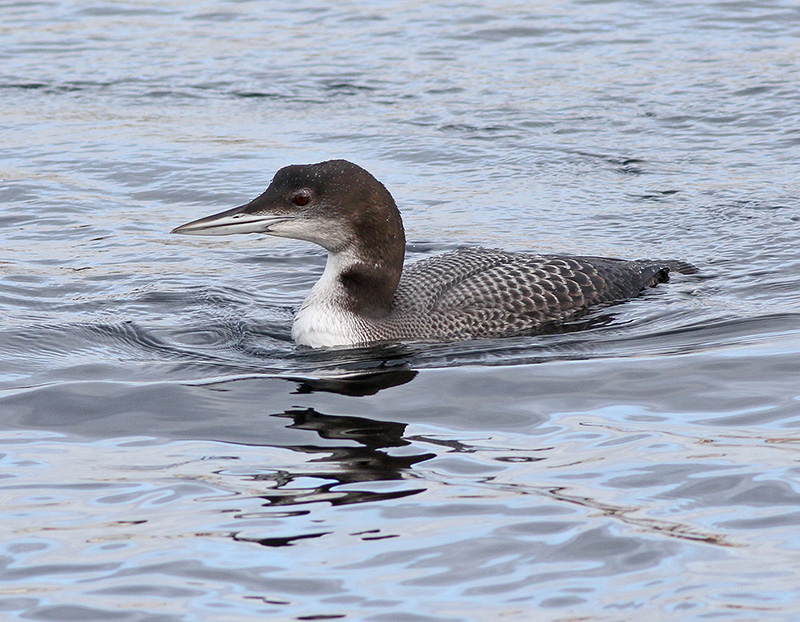
December was as struggle with foul weather and few birds though a sparrowhawk flew into range at some local woods and I twitched a great northern diver at Chatham.


My highlight of the month was a few days in Devon where I saw and photographed cirl buntings and picked up a few yellow-browed warbler shots.


The year started with me determined to twitch a little more when things were quiet on the home patch. Well I failed - everything seemed to be turning up at Sandwich (though there was a mega at Dunge that I didn't twitch).
It was undoubtedly a spectacular autumn locally and one I suspect I will have to wait a long time to repeat. The trips to The Gambia and Sri Lanka were brilliant - sun, warm and loads of birds and whilst not exactly twitching the Cirl buntings at Broadsands were brilliant value.

Finally Steve Ashton needs to be thanked for organising our trips to France.

Lets hope next year is a good for me and for anyone who has got to the end of this twaddle.

Happy new year.

Friday, 11 December 2015

7/8th December -Broadsands and Cirl buntings

With my wife due to be having a week in Tenerife with friends I had been looking around for somewhere to go where I could photograph something interesting. Eventually by straining the brain I came up with Broadsands and it's cirl buntings. I have seen cirls before but only in Spain and the few pictures I'd taken were rubbish. The cunning plan developed consisted of me taking Angie and her friend to Gatwick and continuing on to Devon. However 24 hrs prior to departure the weather forecast looked lousy. On Sunday Storm Desmond was due to hit and the rest of the week looked like wall to wall rain as well. Even on Saturday morning the weather forecasts for the week ahead were not hopeful and the forecast for Sunday were downright dire so the plan was shelved and after dropping them off at the airport I came home.
By Saturday night the forecast for Sunday was still wet and windy but with it clearing up on Monday with some hope of sun on Tuesday and Wednesday. That was it decision made and late Saturday I booked a hotel for 3 nights.
The drive down Sunday was wet and windy and driven drizzle greeted my arrival. Still I drove to Broadsands to have a look around. Within 30 seconds of getting out of the car I had seen a firecrest (possibly 2), some goldcrests and a decent size flock of siskin. I wandered to the far end of the fenced off  car park and found a group of about a dozen birders that I thought were looking at crests but I didn't linger - one of them had a dog that stood 3 feet away and wouldn't stop barking at me. The owners only comment being  "He's normally very friendly" - not a sniff of an apology.
Anyway all in all he did me a favour because I went round the adjacent car park and found the area seeded for the cirl buntings. Even better news was the car park was open so I drove over there, parked where I could have the window open (and remain dry) and waited. The seeded area was owned by a robin who continually chased away the dunnocks and chaffinches who were trying to feed on the seed but eventually 3 cirl buntings turned up and he kept chasing them as well. All were juveniles/females so I started to have doubts as to whether I was looking at cirl buntings or yellowhammers. Still I had some reasonable pictures (albeit shot at heroic ISO) and I thought I could sort out the actual id later.

Cirl bunting (juv)

Monday morning and the weather forecast was not as good as they'd suggested 24 hrs earlier.
Still I got down to Broadsands at 8.15 to have a look around. The northern most car park was now locked so sitting in the car was not an option. I loaded up and wandered over. Almost immediately cirl buntings started arriving - including males so no doubts as to the id this time. Most of the time I had 4 males and 3 female/juveniles in front of me despite the best efforts of the robin.

I hung around there for a couple of hours and at times the light got good enough to drop to ISO 400-500. Most of the time the birds were on the floor and I only managed to get them in the bushes on a few occasions but all in all I was well pleased with the results.
The buntings seem very tolerant of your presence as long as you stand still or move very slowly. Any sudden movement even when quite distant put them to flight. My most successful tactics involved being on my knees and slowly edging forward This allowed me to get within 8-10 yards.(It was a bit tough on the knees though!) The light wasn't brilliant but good enough for slow moving birds on the deck and immobile one in the bushes.


Cirl bunting (female?)

Cirl bunting (male)

A couple of hours and 500 shots later I wandered off to look at the sea where I found 2 other birders (one of whom was guiding the group I saw yesterday in the car park) and saw 2 Slavonian and a black necked grebe and a very distant diver.
They told me of a yellow-browed warbler in the corner of the car park - this was what the dog and its owner was watching the previous day.
Anyway, several chiffchaffs, goldcrests, and firecrests later I finally saw the yellow-browed. At this point I wandered off to look for the siskins but they had disappeared.


Lunch called so I went into Brixham bagging a shag on a slipway then it was back to Broadsands with the sun shining!!!! It was not all good news though because by 1.30 the corner the cirl buntings  come to is in the shade at this time of year. Still I got a few shots of them in the sun..

Shag


I returned again to the beach where I could see a couple of very distant black necked grebes (I'd been told there were about 8 out there). I have decided black-necked grebes must be lousy at catching fish as they dive incessantly for hours on end. Also seen were a few gt crested grebes then right below me a razorbill swam past and circled the bay!

Razorbill

That was it. The sun hadn't shone very much but it was a good day.

Tuesday was a lot brighter so I started with the cirls again. My intention was to concentrate on birds in the trees/bushes as I had a load of  shots of them on the floor. Almost immediately I had 3 females/juveniles in front of me along with several dunnocks and chaffinch. I'd only been there a few minutes when a male sparrowhawk shot past grabbed a dunnock less that 10 yards from me, talons scraping on a car park tarmac and disappeared behind the bushes with it's victim. That was the last I saw of the cirls though I did see the sparrowhawk fly past again so it may be it was in the vicinity all day. Over the next 5 hrs I returned several times but not a sniff of a cirl.
The rest of the time I was either trying to get some pictures of the yellow-browd or wandering around the bay and along the low cliffs to the south.


Yellow-browed warbler

Both endeavors were successful(ish) with some shots of the yellow-browed and distant views of a number of black headed grebes (I was told 8 were around but I only saw 4), a slavonian and the razor bill again. No sign of any divers though.

Slavonian grebe (honest)

Black-necked grebe with pipe fish


I did think about having another session Wednesday morning but decided to give it a miss and leave for home early. The failure to get any shots the second day made my mind up.
I most birds I saw around was 7 though one of the locals said he'd had 10 (It's possible I missed some in the bushes). This number seems to be well down on normal but the low numbers were thought to be due to the mild winter to date with birds still finding enough food on the fields. I was also told that in some breeding areas numbers have dropped due to farming subsidies to leave stubble fields over winter having been withdrawn.

I'm still puzzling a bit of separating juvenile cirl buntings from yellowhammers and will try to do a post on the number of plumage variation I photographed.


Sunday, 1 November 2015

October (odds and ) Ends

The weekend has mainly been about watching rugby but I have enjoyed a few short sessions with the oiseaux.
Friday I was expecting overcast conditions but awoke to sunshine so I dropped down onto the seafront to check out the scrub. Fortunately as I arrived a flock of tits and crests were moving through with one of the firecrests showing very well for about 2 minutes.


The flock soon moved on so I left to check out the red-breasted merganser at Dover Harbour.
It seems this RBM has been there for a number of weeks but I only heard about it this week - not having a smart phone the only tweets I hear about are from the birds themselves. Anyway I arrived, it was there, it came close but overall despite trying all sorts of camera settings the shots were a disappoint. This may have been due to the dull conditions, slow shutter speeds, the need for high ISO settings or the general problem I have of getting decent shots at the harbour. Overall the outcome of this session was a lot of pictures to delete.
Saturday was a lot brighter so I returned to the harbour for another go. Better shutter speeds this time and lower ISO settings but again a lot of the shots were disappointing - I'm sure the reflected glare from the water as you look down on the bird is the main cause of the problems because if you ever get the opportunity to take some shots from one of the pontoons (ie at water level) they are far better. Anyway I at least I managed a few acceptable images.


Sunday dawned quite bright at Kingsdown with the forecast suggesting it would cloud up as the day progressed. Needing some exercise I thought another walk along the beach at Sandwich to look for snow buntings, shore larks and Dartford warblers could be rewarding. This plan lasted all the way to the Cinque Ports Golf Club which was where the fog began and got steadily worse as I approached the Observatory.
It was so bad at the Obs I didn't even get the gear out of the car.
The fog cleared as I drove south so I decided to go to South Foreland to look for the Snow bunting that had been reported there.
I must admit my expections were dampened as I arrived as there were a large group of party goers on the approach track - seems they had pulled a haloween open-air all-nighter and were all a bit the worse for wear. The good news was none of them had actually reached South Foreland light house .......and the  sun was shining.
I'd only gone 50 yards along the track when I spotted the snow bunting feeding on the track. It let me get to around 20 yards away then held that distance. If I stopped it stopped. If I approached it hopped along at the same rate. Hmmmm what now.


After a while I spotted some dog walkers coming towards me from the other side of the bird. So I got low and waited hoping they would drive the bird in my direction. But no. These were considerate walkers and when they spotted the bird they put the dog on a lead and moved into the field to get past it and not disturb my "fun". Once past they came back to me and we had a chat and chuckle about what had just occurred.
Then a jogger came along from the same direction. I knew this wouldn't be any use and it wasn't. The bird flew out over the field but came back to the path south of me.
Eventually Steve Raynaert turned up and I pointed the bird out to him. Since I had a few shots (though none were that good) I told him to wait where he was and I'd get behind the bird and shoo it towards him. This was working quite well until it decided it didn't want to go any nearer to Steve and allowed me to approach much closer than I'd managed before (it obviously preferred me to Steve!).


Then another walker came along from behind Steve. Now this one didn't stop and ask what was going on until after he had flushed it. Even this was not the bad news it might seem because with me one side and Steve and the flusher the other it flew a few feet into the field very close to where I was standing. It didn't stay there long but the light was brilliant.


Just a shame England didn't make it to the world cup final.