Wednesday, 11 May 2016

Are Tele-converters worthwhile

Most people who know me know I don't use a teleconverter and indeed I don't even own one. I know a lot of people who do own and use them but most of the time I'm either unimpressed by the results or even when they look ok I tend to think they would probably have looked better without one and doing a slightly tighter crop.
I certainly know several people who have purchased them but abandoned using them after a few days because they are so disappointed in the results - though it must be said that I also know a couple of people who swear by them.
Anyway this last week a friend of mine lent me his 1.4x converter (one of those who abandoned) so I set about trying to get hard evidence that my perceptions ( i.e.that they are a waste of time) were correct.

I have previously tried to get an answer to this question by searching the internet but have failed to find a report where the results with and without converter are compared directly.

Methods:

Since my lens ( Canon 400mm f5.6) is not image stabilised all test shots were taken with the camera mounted on a tripod. In every test multiple images (normally 10) were taken so as to avoid the possibility of camera shake or a slightly missed focus influencing the results.

The targets used for these tests were either A4 photographs of birds where lots of plumage detail could be seen or a test chart published by Bob Atkins (ref   http://bobatkins.com/photography/technical/lens_sharpness.htm    )

The targets were set up approx 12- 15 yards from the camera (a Canon 7D mk 2).

Downstream processing was zero other than cropping and resizing so that both set ups gave an image of exactly the same size. Obviously the greater magnification achieved with the converter in place meant the reduction in pixels was significantly greater for this set up. For example using the Bob Atkins target the cropped image without the converter was 940 pixels wide whereas with converter it was 1325; both were reduced to 800 pixels for use in this blog. No attempt was made to optimise image quality in Photoshop.

The first set of shots were taken using a picture of a little green bee-eater as the target. On the back of the camera I was convinced the results were better without the converter but when the shots were processed as described above there was very little between the best shots at either setting though more pictures were poor/unacceptable when the converter was used. I now think this may have been due to the low shutter speeds -  it wasn't a very bright day and I had 1/500th without converter and 1/320th with (more on this later):

Without converter
With converter
Whilst the differences are small if I really had to choose between the two I'd go with the shot taken without the converter.

A day or two later I repeated this test using a picture of an Indian Pitta.

without converter
With converter

In this test I was focusing on the breast plumage (NOT the eye) and the results were pretty clear - the image after re-sizing was better WITH the converter than without. This time I didn't see the failure rate I saw with the bee-eater shots.  I attribute this to the greater shutter speed  achieved on this day - it was sunny and even with converter I was getting 1/5000th sec.

The final test was with the Bob Atkins chart. Here the results were again unequivocal - the more detailed images were achieved WITH the converter.

No converter
with converter

As before these are straight out of the camera.
The place to see the difference in sharpness and resolution is with the  4.5 and 5.0 sets of horizontal and vertical lines - without the converter complete resolution is achieved with the 4.5 set but lost with the 5.0 set. With the converter complete resolution is achieved at 5.0 and is almost achieved at 5.6; it's gone by 6.3. (this is easier to see on the raw images than on the blog shots but just look at the 4.5 block and the difference in quality is clear)
For these shots the camera was around 14-15 yards from the target and the "4.5" target width (horizontal and vertical lines) is 5.0 mm wide and approx 3.5mm high.

I did repeat the test without a converter but using f8 (the aperture you get when using a 1.4x converter) but the results were identical to those achieved at f5.6.

So there you have it. I was wrong. In my hands and under my test conditions the 400mm f5.6 with converter outperforms the lens alone.

Using the converter does have significant drawbacks in that the best you can get is f8. This has a significant impact on the shutter speed, decreasing your ability to freeze any movement of the subject and makes the set up more sensitive to camera shake.  This latter point was very noticeable during the test where, even though I was on a decent tripod and sitting in a chair, the amount of camera shake with the converter was a lot more apparent than without. Also when the light was poorest (the bee-eater shots) several shots were lost to motion blur when using the converter. I didn't try using remote or auto shutter release or self timer. Finally it should be remembered that the 400mm f5.6 does not have image stabilisation so this problem may not be so apparent for an IS lens.

I also expect the converter will increase the time the lens takes to focus but I didn't try to assess this not least because I have no idea how to attempt it in a quantifiable manner.

So where does this leave me.

I think I have to see how much my friend wants for his converter; if the price is right I'll buy it. For most of my work I will continue to use the lens without a converter especially for motion shots where shutter speed and speed of focus is paramount (I have enough trouble getting decent hand held shots as it is; I doubt if I'd get any at all with a converter in place). I would certainly try to use it if the subject was standing still and/or the light was decent - though it would have to stand there long enough to put the thing on!

How do I reconcile my results with the perceptions I mentioned at the start. Certainly those who have given up on a converter only hand hold so perhaps their problem is motion blur. Certainly one of the guys who swears by them uses a tripod a lot of the time minimising motion blur. So perhaps my previous conclusion were due to the greater difficulty in holding the set up steady with a converter rather than the intrinsic quality of the image.


Friday, 8 April 2016

Sri Lanka 2016 - Mirissa (8th - 11th March)

Those who have been following my Sri Lanka odyssey  may have noticed that birdwatching has disappeared from the title. This is because our last destination, Mirissa, was not much of a bird watching destination. But we weren't there to see birds, we were there to see whales.
Sri lanka has recently become one of the places to go to see whales - mainly blue and sperm. This is a result of the discovery that whales migrate from the Bay of Bengal to the Arabian sea around the tip of Sri lanka and the small town/harbour of Mirissa has emerged as the place to go. Mirissa has another attraction in that it has one of the best beaches in southern Sri lanka and whilst there are a lot of hotels and guest houses they are, in general, small family run businesses. Most of the local restaurants actually sit on the sand, indeed whilst partaking of a beer or something to eat it pays to watch the waves as they can wash up under your table.


Water getting close though beers nowhere to be seen....yet.


We stayed at a small hotel (~10 rooms) called the Handagedara Colonial Villa and whilst what I would call medium priced for Sri Lanka (~ £50 BB per room) it was excellent value having clean, good sized rooms, a nice pool and their rice and curry dinner (fish or chicken) was superb value at around £3-3.50 per person!!!!! It was also only about 200 yards from the beach and a similar distance to the harbour in the opposite direction.
We had 3 nights at the hotel giving us 2 possible days for the whale watching (in case there were problems with the weather). The first night we dined at the hotel on rice and curry but for the other 2 nights we dined on the beach where the sea food was superb - select the fish or prawns (really small lobsters) you want from those on display and just wait for it to be cooked supping the local beer and soaking up the atmosphere. Bliss.


Bird watching wise Mirissa was not up to much. There were a few bits and pieces around the garden including black capped oriole, pale bellied drongos, flower pecker, sunbirds, brown headed barbet but no where to do any serious birding. I had been banking on the harbour having a good head of gulls and terns but no such luck. All it had was a few whiskered terns. As we were departing the lady of the house/hotel informed me there was a local ornithological group but it was too late by then..........

Our whale watching was with Raja and the Whales. This was $60 per head and whilst not the cheapest they were well reviewed on Trip Advisor and recommended by our hotel (not over crowding the boat, good safety equipment). In addition breakfast (fruit and omlette, juice and coffee) was thrown in as was bottled water. They also follow the local whale watching code of conduct which dictates how close you can go to the whales and your direction of approach. Not all the boats there follow this and some get very close - great for seeing the whales but not so good for whale welfare.

Their old boat! We were on the new one.

The two main species of whale seen are blue and sperm. The blue whales being out in the deep water around 6 miles off shore. The sperm whales can be anywhere so seeing one is more hit and miss.
We steamed out to the deep water and I missed the first 2 sightings of blue whale blowing but a little later we started getting regular views, some distant, some quite close. It's not that difficult to find them if they are there - the pilot, up on a flying bridge, and a few other crew members, watch for the blowing then direct the boat towards it. The whales normally stay on the surface for 10 minutes or so giving ample opportunity to close in then it dives:

Blue whale fluke with 2 remora in situ

Blue whale with blow hole showing


In all we saw around 7 blue whales which was brilliant.

On the way back in we looked and found spinner dolphins. These were feeding on what looked like small tuna (or a bait ball that both the dolphins and tuna were feeding on) and would mill around for a few minutes then disappear as the tuna/bait ball moved away.
There was no time to think about the shot, it was a matter of seeing where they were and shooting in the hope they would come out of the water close to where you were focusing.

Tuna falling back into the water

Spinner dolphins
Spinner dolphins

Anyway all in all we had a great morning.

Our second full day there was spend by the beach, watching the world go by and aided by a beer or two.
It was a wonderful end to a fantastic holiday.

Wednesday, 30 March 2016

Birdwatching Sri Lanka 2016 - Bundala

Like Yala our trip to Bundala involved a 5.30 pick up by Pradeep (Safari in Sri Lanka; http://www.safariinsrilanka.com/). It's quite a long drive to Bundala across largely agricultural land and quite a few birds were seen along the way - especially bee-eaters. Almost everywhere we went the telegraph/electricity wires were covered in green bee-eaters. We saw hundreds of them.
Also on the way we stopped to take a small tortoise out of the road.

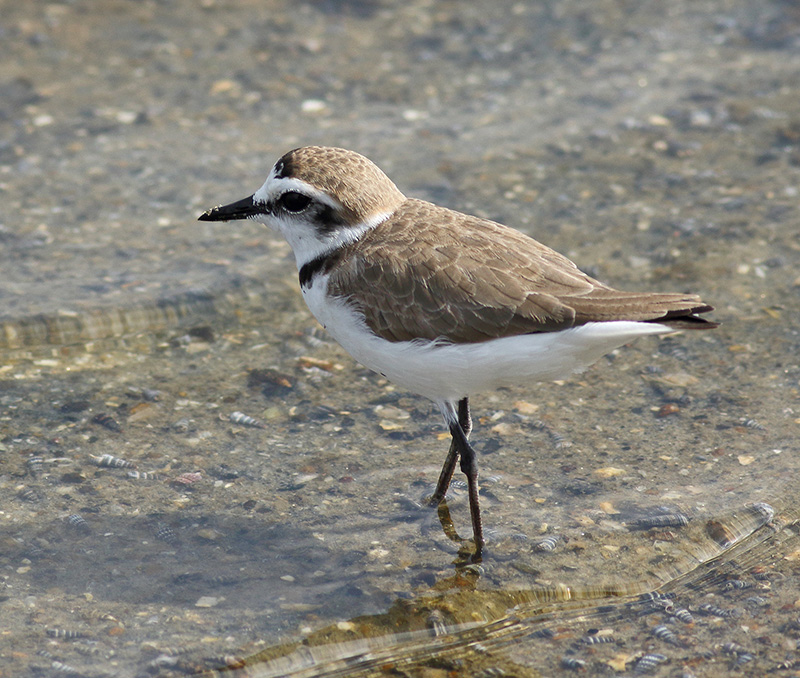
Our first stop was at a large lagoon on the road to the Park ticket office and visitor centre where we looked at loads of waders.........and the confusion began. Pradeep was pointing out lesser and greater sand plovers but with only binoculars I was struggling; in fact I was struggling to tell the difference between winter plumage Kentish and the sand plovers. I did take a lot of pictures but most of the time the birds were too distant for decent images.

Lesser Sandplover

Kentish plover

Kentish plover - summer plumage

What was easier to pick out were marsh sandpipers - there were several present along with greenshank and wood sandpipers.

Marsh sandpiper

Further out there was a small flock of terns - whiskered terns mainly many attaining their dark undersides and we had a white wing black tern do a fly-past.
Prideep had already asked if we had any particular targets and I said small pratincole and ashy crowned sparrow-lark and after we'd been there for a while he said there were some pratincoles out near the terns. They were too far for me any my binocs so I fired off a few shots. When I looked on the back of the camera it was clear they were collared or oriental pratincoles. They did come a little closer but were always distant.
I had rather hoped they would be orientals but I'm sure, from the pictures I obtained, they were the rarer (for Sri lanka) collared variety because the tail reaches the end of the wing tips, the tail of the oriental is distinctly shorter than the wing tips. So an excellent bird but not a life tick.

Collared pratincole - id by tail length
We then we moved on to the ticket office/visitor centre. If you go to Bundala try and stop for a few minutes at the ticket office because they have display cases of skeletons of many of the creatures you can see in the park including one of a crocodile.

Once in the park you drive through scrub which then opens out onto various pools. In the scrub we had brilliant views of blue-tailed bee-eater and Sri Lanka jungle fowl and in the early pools, egrets, herons, spoonbills and painted stork along with more waders (green and redshank, more marsh sandpipers, black-winged stilt, pheasant tailed jacana).

Blue-tailed bee-eater


The scrub soon gives way to the main lagoons/salt pans  where you drive along the embankment between lagoons/pans. Here we had paddyfield pipits on the embankments and along the shore lines Kentish, lesser sandplover and little stints and a few distant pacific golden plovers. By approaching very slowly or parking up and simply waiting allowed us to get close to these and get some great pictures.


Also on the lagoons were terns and again by parking up and waiting gull billed, little white winged black and Caspian terns flew past.

Gull billed tern

White winged black tern

Little tern

Towards the seaward end of the embankment we stopped to view a roost of terns - these were mainly lesser and greater crested terns:


The greater crested terns have the pale yellow beaks and the lesser crested the orange-yellow beaks.

It was here that Pradeep spotted a couple of small pratincoles - distant but at least we'd got the tick. We lingered here for quite some time photographing the aforementioned waders then Pradeep called our attention to small pratincoles flying past and towards another lagoon that looked linked to the sea.
Pradeep didn't normally go to the shore of this lagoon but another 4x4 had been along there so we tried our luck.
Once there we saw many of the same birds as we had already seen but whilst we parked up and after a short while a couple of small pratincoles came pretty close and were hunted for insects on the sands/mud either by picking them off whilst simply walking/running or flapping along just above the sand.


All too soon it was time to go and we started for home. We hadn't gone too far when Pradeep spotted a black shouldered kite in one of the taller tress in the scrubby area then back on the main road he spotted a black bittern on the roadside marsh and quite close.


Also on the way home he stopped for an Indian Roller on the wires and our final stop was for some ashy-crowned sparrow larks and an  oriental skylark that seemed to be thriving in amongst the extensive roadworks we encountered.


I'm sure if we were just bird watching (and had a scope) we would have seen more species because we spent a lot of time at our stops trying to get decent pictures..
As a photographer I could have done with several sessions in the park because for a number of species I failed to get a usable shot (eg greater sand plover) or I only managed  record shots - you could easily have spent most of a session on the terns alone.
It would also be useful to know the place well enough to chose the best time to be at individual pools - ie with the sun behind rather than in front of you.
However it was excellent as was Pradeep who was helpful, patient and was sympathetic to our needs (the desire to get photographs of what we saw) and managed to locate the species I asked for ( small pratincole and ashy-crowned sparrow lark).
Pradeep did invite us back to his home for a Sri Lankan lunch but we'd already been out way longer than we had booked for and we had an appointment with a beer by the pool with our wives.

Tomorrow we were off to Mirissa.


Sunday, 27 March 2016

Bird watching Sri Lanka 2016 - Yala National Park.

On our second day at Jetwing Yala we went on a safari to Yala National Park. This was organised by Pradeep Kumar who has just started up his own company (Safari in Sri lanka; http://www.safariinsrilanka.com/) and can be contacted on jgpradeep@yahoo.com. We actually met Pradeep in Victoria Park, Nuwara Eliya, where he was guiding a group of birders. We had a chat where we learned he came from Yala and about his company. He said he could arrange our Yala trip (though he would be in Kandy) but he would be back in the Yala area for our planned trip to Bundala.  His rates (at the time) were excellent at SR 9000 for the day (4500 for a half day) for either destination. This covers the 4x4 and the driver. Entrance to the parks themselves is extra at SR3000 per person for Yala and around SR 2500 for Bundala. For the Bundala trip Pradeep acted as driver and guide; I think the going rate for a guide organised by Pradeep if he can't be there is SR2000 (~£10) so no big deal.
Anyway we were picked up at around 5.30am (the driver being a few minutes late and for which Pradeep apologised for continually when he took us around Bundala).
If judged by whether we saw leopards or not then Yala was not a successful trip. None were seen by anyone whilst we were there though one was spotted as the light was fading and just before the park closed at 6.00pm. We were long gone by that time having given up by 3.00 pm. There are quite a lot of 4x4s in the park and as soon as anyone finds anything of note the news gets around very quickly. We saw an example of this when a bear was found. Our driver was told by someone who was leaving the scene so off we shot with our driver telling anyone he met. So if anyone has found a leopard every 4x4 in the park will soon know.
Despite not seeing a leopard and only having obscured views of a bear it was a very enjoyable day because we saw plenty of crocodiles, quite a few elephants and had some brilliant views of birds.

One "view" of an elephant was particularly interesting. We were going up a track when a group coming the other direction told us a 4x4 up ahead had been attacked by an elephant and had the windscreen broken. A few seconds later several more 4x4s were reversing towards us.............the angry elephant moving purposefully after them. As we reversed up to a junction the elephant could be seen coming towards us but at the junction it disappeared into the bush.

One angry elephant

Later that night back at the hotel I was speaking to another birder and it turned out it was his 4x4 that was attacked.

Anyway as we drove around we did see lots of birds and some of the bee-eaters were ridiculously close - we'd told the driver we were interested in birds so he stopped whenever he or we spotted something.

Green bee-eater

Chestnut headed bee-eater

I'm not sure whether it was the bush telegraph in operation or our driver being in the know but he took us to a brown fish owl.  I'm sure he couldn't have spotted it as we drove along but only one other 4x4 turned up at the place but perhaps the others weren't interested in birds.


Here's a few more shots taken during the day:

Spotted deer - very distant

Boar

Mugger crocodile

Yellow-wattled palwing

Greater thick-knee

White-bellied sea eagle

Malabar hornbill

Black-headed ibis

Painted stork


A good day.

.